

Most clothing today is made to be replaced. Designed quickly, produced cheaply, worn briefly, discarded. The economics of mass production demand speed above all else — and speed, in garment manufacturing, is the enemy of quality.
At The Rugged Soul, we work against that current. Not as a marketing position, but as a practical commitment that shapes every decision we make — from the fabric we source to the partner we choose to make a single jacket.
We call this the Craftsman Spirit. Here is what it actually means.
Crafstmanship is not about perfection
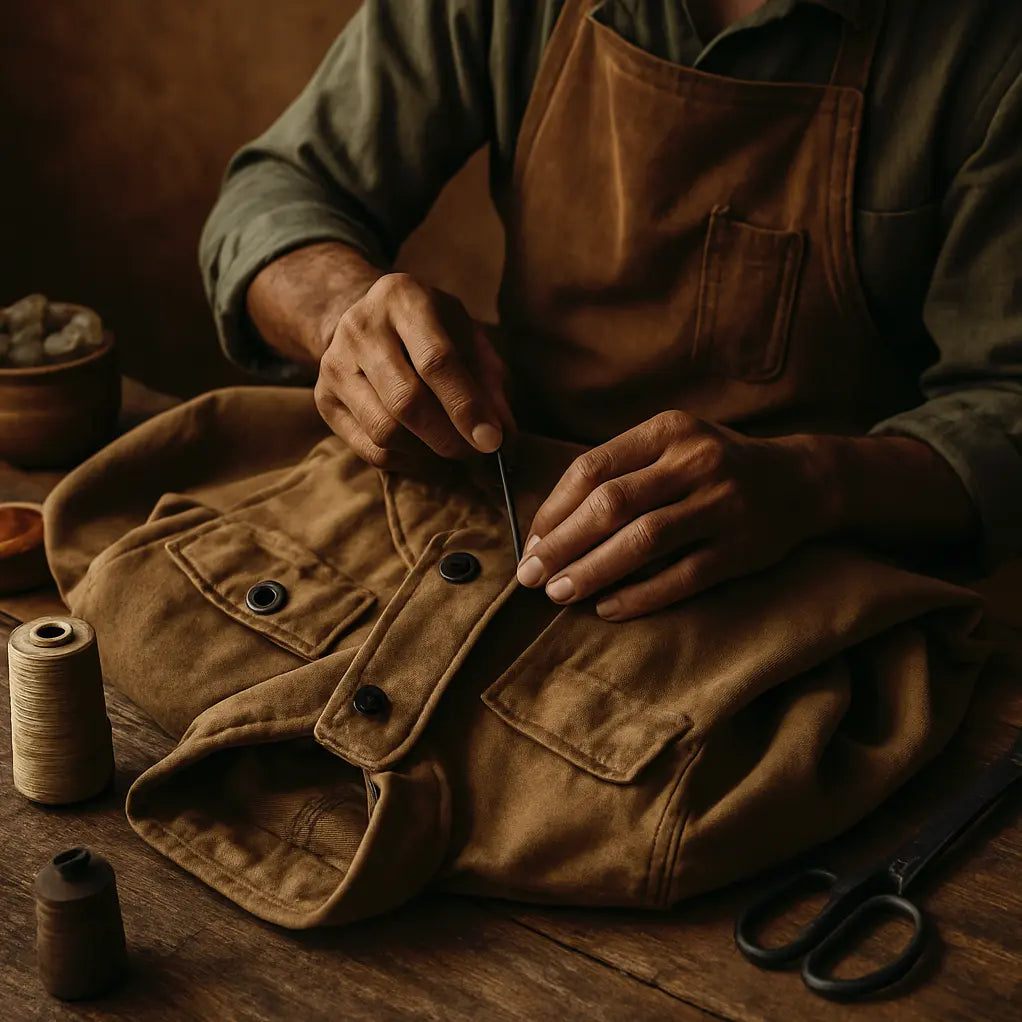
People often assume that "craftsmanship" means flawless finish, zero variation, machine-like precision. That is manufacturing. Craftsmanship is something different — it is about intention. Every stitch serving a purpose. Every seam built to hold. Every detail considered, not assumed.
It means choosing the right fabric, not the cheapest. Revising a pattern until the fit is genuinely right, not just acceptable. Checking each garment with the same care whether it is the first piece or the fiftieth. It is not about doing more. It is about doing it with your full attention.
We do not own a factory - and we are proud of that
At The Rugged Soul, we work with a small network of independent manufacturers and artisans who share our values. Not anonymous factories optimising for volume, but skilled partners who care about what they make.
We are deliberate about who we work with. For each category — outerwear, shirts, trims, finishing — we spend time finding the right maker. We align on specific benchmarks: stitch density, seam construction, fabric handling, finishing standards. And when a piece does not meet those standards, we remake it. No deadline justifies compromise.
This is slower. It is also the only way to make something worth owning.
What actually happens before a jacket reaches you
Slow fashion is easy to claim. It is harder to explain what it involves in practice. For a single jacket at The Rugged Soul, the process looks something like this:
- Fabric sourcing: We select only natural woven fabrics — cotton canvas, hemp blends, cotton-linen — chosen for strength, breathability, and how they age.
- Pattern drafting: Silhouettes are refined across multiple iterations to balance structure with ease of wear. A pattern that looks right on paper often needs significant adjustment on a body.
- Sampling: Every new style goes through rounds of prototyping. Fit, function, and finish are all tested before a single production piece is cut.
- Small-batch manufacturing: Our partner units produce in limited runs, which allows tighter oversight and greater attention to each piece.
- Quality inspection: Every finished garment is checked — seam strength, pocket symmetry, collar shape, construction consistency.
Craftsmanship is not a single act. It is a relay of responsibility across every person and every stage in that chain.

Slow fashion means knowing when not to launch
We do not release new styles on a schedule. We release when we are proud of what we have built — which sometimes means sitting with a sample for weeks longer than planned because something is not quite right.
We choose durability over disposability, even when it is the harder commercial decision. We treat every return or repair request as feedback, not failure. Because if you are building something to last, the measure of success is not the first wear — it is the fifth year.
The Craftsman Spirit is not a marketing term. It is the answer to a question we ask ourselves about every piece we make: would we be proud for this to carry our name in ten years?
If the answer is yes, it ships. If not, we go back.
Made with intent. Built to last. That is the only spirit we build with.
Share:
Thoughts on design
The Hidden Threat: PFAs in Clothing