


There is a certain kind of person who pauses before buying something.
Not out of budget anxiety, not because they’re waiting for a sale, but because they’re actually thinking about it. Weighing it. Asking whether this thing — this jacket, this shirt — deserves a place in their life. Whether it earns its keep not just by covering the body but by meaning something.
This person is not easy to market to. They don’t respond well to urgency. Flash sales leave them cold. The seasonal “new arrivals” email goes unread. They’ve quietly opted out of the rhythm that the fashion industry depends on — the one that says what you wore last year is already wrong, already behind, already a version of yourself you should want to discard.
Most brands find this person frustrating. We find them interesting.
The performance trap
Somewhere in the last decade, conscious dressing got hijacked. It became a category — sustainable fashion — with its own aesthetics, its own influencers, its own version of the trend cycle it claimed to reject. Linen sets with ethical sourcing footnotes. Capsule wardrobe content that somehow required buying twelve new things. Greenwashing so polished it started to look indistinguishable from the thing it was supposed to oppose.
The result is that many thoughtful people have grown allergic to the vocabulary entirely. Mindful consumption. Slow fashion. Intentional dressing. The words have been used so often, in service of so many things that don’t deserve them, that they’ve started to feel like noise.
But here’s what hasn’t changed: the underlying instinct is real.
There are still people who find the trend cycle genuinely exhausting — not as a pose, but because they have other things to think about. People who find something faintly absurd about the idea that what they wore in October is aesthetically obsolete by March. People who want their clothes to be good, to last, to feel like themselves — and who have quietly stopped needing permission from a season lookbook to know what that means.
That instinct doesn’t need a rebrand. It needs to be taken seriously.
What your wardrobe actually reflects
Clothes are, among other things, a set of daily decisions. And daily decisions, accumulated over time, are a portrait of how you think.
This is not about fashion as self-expression in the Instagram sense — the curated flat lay, the outfit of the day. It’s something quieter and more durable. The person who always reaches for the same worn-in jacket on a Saturday morning isn’t making a statement. They’re being consistent. They know what they like. They’re not auditioning their identity for an audience; they’re just living in it.
There’s a particular clarity that comes from owning fewer things that you’ve chosen well. Not minimalism as an ideology — not the performance of a clean, beige interior — but the practical, cognitive relief of a wardrobe where almost everything earns its place. Where you’re not managing options, you’re just getting dressed.
This kind of clarity is not about restriction. It’s about the absence of noise. And noise, in this context, is everything you own that you don’t quite believe in.
The economics of conviction
Somewhere along the way, quality got repositioned as luxury — something you permit yourself once you’ve crossed a certain threshold. But that framing has things slightly backwards.
The expensive choice, more often than not, is the one you make without conviction. The purchase that hedges. The thing you buy for now, with the unspoken assumption that something better might come along — or that this will do until you figure out what you actually want. Those purchases accumulate. They fill wardrobes without filling the gap they were bought to fill. And eventually you’re surrounded by a lot of things you don’t quite believe in, none of which add up to a wardrobe you trust.
Buying with conviction looks different. You’ve thought about it. You know why it’s right. You’re not managing options — you’re making a decision. And a thing chosen that way tends to stay chosen. It doesn’t drift to the back of the wardrobe. It doesn’t get quietly replaced. It gets worn, and worn in, until it becomes so thoroughly yours that replacing it would feel like a minor loss.
That kind of purchase is increasingly rare. It’s also, in a quiet way, a form of resistance.
Rugged individualism and the wardrobe
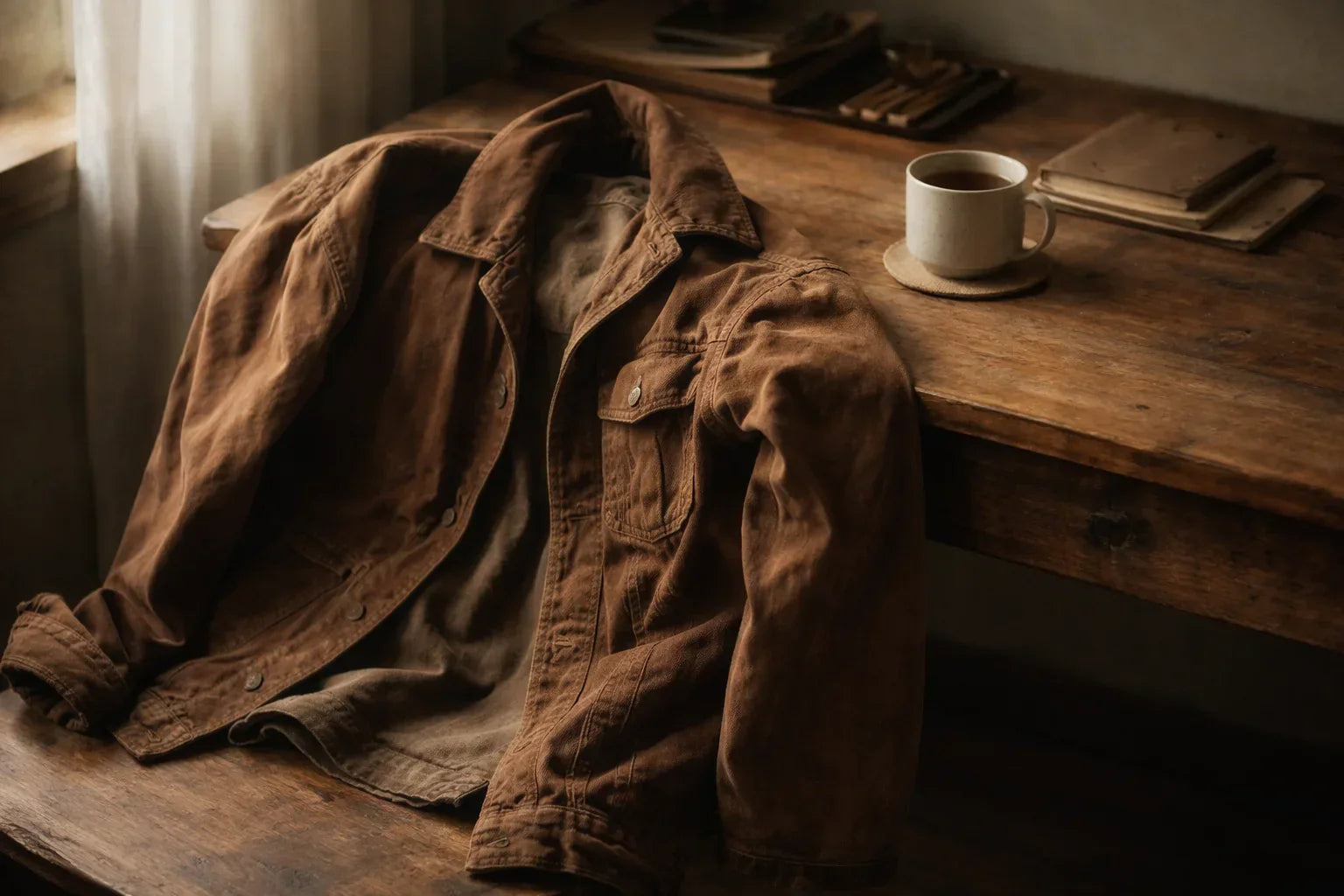
There’s an old, unfashionable idea — slightly weathered now, like a good canvas jacket — that the person of character is the one who has thought things through for themselves. Who has convictions that didn’t arrive pre-packaged. Who doesn’t need consensus to feel confident in a choice.
This shows up in how some people dress in the same way it shows up in how they read, what they argue about, how they spend their Sunday mornings. Not as a statement, but as a consistency. The examined life, in the old Socratic sense, extends to the small things — which is precisely why the small things matter.
What you wear is a small thing. It is also, across a lifetime, a very large accumulation of small decisions. And those decisions either cohere — they say something recognisable and true about who you are — or they don’t. They’re just reactive. Just noise.
The person we’re describing isn’t trying to dress like an individual. They’re simply being one. The wardrobe follows. It can’t help it.
You already know this
If you’ve read this far, you probably recognise yourself in at least some of it. Not because this is flattery — but because the instinct to think carefully about what you own is not rare. It’s just underserved. Most of the fashion world isn’t designed for you. Most of the language around dressing isn’t either.
You don’t need to call yourself a slow fashion advocate. You don’t need to count your capsule pieces or audit your wardrobe against a checklist. You just need to keep doing what you’re already doing: pausing before you buy. Asking whether it’s right. Choosing things you actually believe in, and keeping them until they give out.
Which, if they’re made properly, takes a very long time.
The Rugged Soul makes outerwear and jackets in natural fabrics — cotton canvas, hemp-cotton, cotton twill — built for people who buy things once and keep them. If that sounds like you, you know where to find us.
Share:
Understanding Hemp: Why This Ancient Fibre Deserves a Place in Your Wardrobe